
Ask a brewery whether they have QC and almost every one will say yes. The meaningful question is what they actually measure, at what point in the process, against what specification, and what happens when a result falls outside that specification. A brewery without documented answers to all four of those questions is not running a QC program — it is running on optimism.
Quality control in brewing spans the entire process from incoming raw materials through the packaged product sitting in a warehouse. Problems caught at the raw material stage cost almost nothing to address. Problems caught after packaging cost the entire batch. That asymmetry is the reason that serious breweries measure early and often, rather than waiting to taste the finished beer and hoping for the best.
Raw material incoming checks
QC begins before a single gram of grain hits the mill. Malt is checked for moisture content — the standard specification is typically under 5%, because malt that comes in wet is already degrading enzymatically and invites mold. Protein content is measured because it predicts head retention and haze behavior in the finished beer. The Kolbach index, which measures the degree of protein modification during malting, predicts how the malt will perform in the mash: under-modified malt will not yield clean wort without extended protein rests, while over-modified malt can produce excessive free amino nitrogen and drive fermentation problems. Friability — essentially how easily the malt kernel crushes — predicts both milling efficiency and lauter performance.
Sensory checks are part of incoming malt inspection as well. Color and aroma are evaluated against specification, and any sign of mold — musty smell, visible surface growth, or elevated moisture — triggers a rejection. A lot that passes the instrument checks but smells wrong gets rejected. Instruments confirm; trained noses often catch problems first.
Hops are tested against the supplier's certificate of analysis for alpha acid content, which directly determines bittering potential and therefore IBU contribution in the finished beer. Moisture is checked because hops degrade faster at higher moisture levels, and bacterial contamination is screened because hop pellets are not sterile. Water undergoes a full mineral panel — calcium, magnesium, sulfate, chloride, sodium, and bicarbonate — because water chemistry sets the pH of the mash and the wort, and the mineral profile shapes how the hops and malt express themselves in the finished beer. A brewery without documented incoming QC on all three raw materials is accepting variable inputs with no correction mechanism, and that variability will show up in the product.
Wort quality checkpoints
After mashing and lautering, the collected wort is checked for original gravity (OG) — the sugar concentration expressed in degrees Plato or specific gravity units — which sets the ceiling for alcohol production and the starting point for fermentation tracking. Color is measured in EBC (European Brewery Convention units) to confirm the grist produced the intended color range. Wort pH is checked because it affects enzyme activity during mashing, hop utilization during the boil, and yeast health during fermentation. In breweries that track yeast nutrition closely, free amino nitrogen (FAN) is also measured at this stage — low FAN predicts sluggish fermentation and elevated diacetyl, while high FAN can accelerate fermentation to the point where yeast health suffers at the end of the run.
After the boil, gravity is checked again. The purpose of the post-boil gravity check is to confirm that evaporation went as planned and that the target post-boil volume and gravity were both achieved. Evaporation rate in a kettle is not perfectly constant — it varies with wort loading, steam pressure, and ambient conditions — so measuring after the boil catches drift that happened during the brew rather than requiring brewers to work backwards from a problem in the fermenter. Any deviation of 3% or more from target at this stage is a decision point: proceed with fermentation and accept the deviation, adjust gravity by adding water or concentrated wort, or hold the batch pending further evaluation. The decision is documented either way, so the information is available if the batch shows downstream problems.
Fermentation monitoring
Fermentation is the most complex and longest stage of the process, and the one where most flavor-active problems originate. Gravity is measured daily — tracking the drop from original gravity to final gravity (FG) — to confirm that fermentation is progressing on schedule and that attenuation is reaching the target range. A fermentation that stalls partway through leaves residual sweetness and elevated diacetyl, and one that overshoots the final gravity target produces a beer that is drier and higher in alcohol than specification. Neither outcome should reach the packaging line.
Temperature is continuously logged via probe and controller throughout fermentation. Lager fermentation typically runs at temperatures between 8 and 12°C, and excursions above the set point accelerate yeast metabolism in ways that produce off-flavors — particularly esters and fusel alcohols that are detectable even at low levels. Logged temperature data is part of the batch record, so if a flavor defect is found in a finished batch, the fermentation temperature history is available for root cause analysis.
Diacetyl — more precisely, vicinal diketones (VDK) — is the most critical end-of-fermentation measurement for commercial lager. Diacetyl gives beer a butterscotch or artificial butter character that is objectionable at levels above about 0.1 ppm in lager. Most commercial lager breweries use a forced diacetyl test: a sample is warmed to 65°C and held for 30 to 60 minutes. The heat accelerates the conversion of alpha-acetolactate, a VDK precursor that the yeast excretes during fermentation, into actual diacetyl. If the forced test shows diacetyl above threshold, the beer is not ready — the yeast needs more time at diacetyl rest temperature to reabsorb the compound. The batch does not move to conditioning until the VDK reading comes back clean.
Microbiological monitoring during fermentation is a check that the fermentation is running clean — meaning that the only organisms consuming the wort are the pitched yeast strain, not contaminants. A sample from the fermenter is plated at pitching and again at the end of primary fermentation. Contamination at pitching is usually traced to a sanitation failure in the fermenter or transfer lines. Contamination found only at end-of-fermentation points to a mid-fermentation entry point. Either finding triggers an investigation before the batch proceeds.
Finished beer analysis before release
Before a batch is approved for packaging, it goes through a full analytical panel. The core parameters are: ABV (alcohol by volume, typically measured by distillation or near-infrared spectroscopy), real extract (RE), apparent extract (AE), and original extract (OE, back-calculated from ABV and RE using the Balling formula). These four values together confirm that fermentation performed as intended and that the batch hits the declared alcohol content. CO2 volumes are measured to confirm carbonation is within specification before the beer enters the packaging line.
IBU confirms that the hopping rate achieved the intended bitterness. Color is checked again in EBC. Turbidity — measured in NTU or EBC haze units — confirms that filtration or cold conditioning achieved the target clarity for the product style. Diacetyl and acetaldehyde are checked again at this stage as a final flavor safety check. Total dissolved oxygen is measured because even a small oxygen pickup during conditioning or transfer will accelerate staling. pH is confirmed. And a full microbiological screen — total aerobic count, coliforms, and wild yeast — is run before any packaging decision is made.
All of these results are compiled into a Certificate of Analysis (CoA) for the batch. The CoA lists every measured parameter against the product specification range, and any result outside specification triggers a hold. A held batch is not released until the investigation is complete and either the batch is re-evaluated and confirmed acceptable, or it is disposed of. The CoA is the paper trail that makes quality traceable — without it, "we tested this batch" is an assertion, not a demonstration.
Packaging line controls
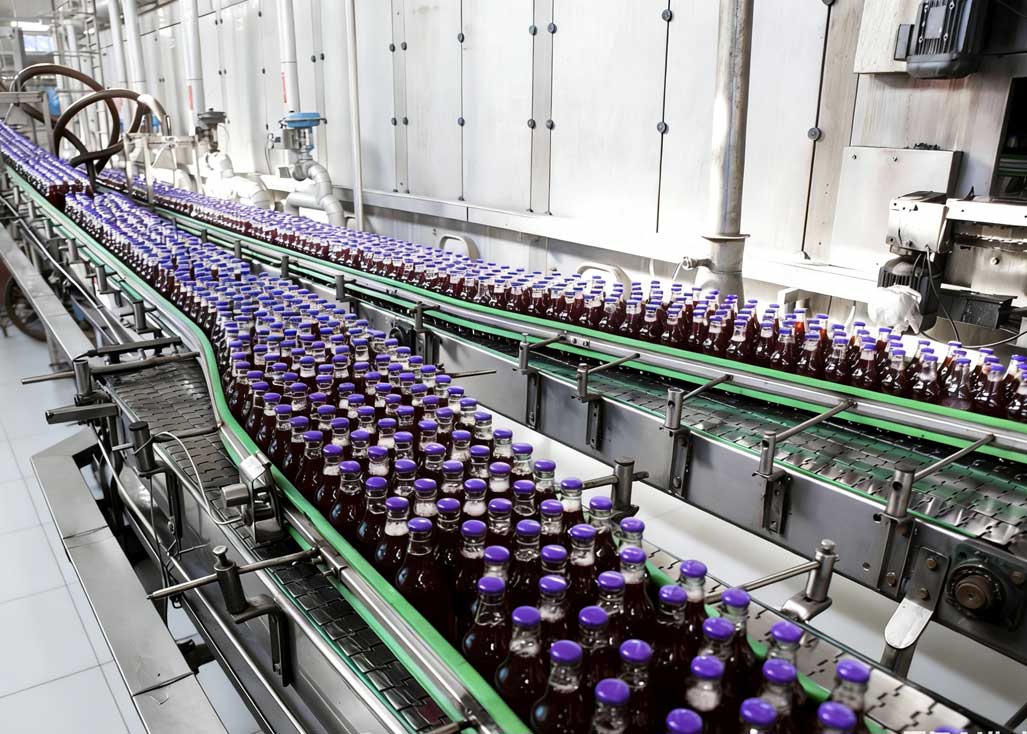
The most consequential measurement at the packaging line is Total Package Oxygen (TPO). Oxygen dissolved in or introduced to the package after the beer leaves conditioning is the primary driver of staling — the cardboard, papery, or oxidized flavors that appear in beer that has been mistreated after filling. Modern canning lines measure dissolved oxygen in the can headspace immediately after seaming using an inline TPO meter. The target for mainstream beer is typically under 50 ppb; for premium or hop-forward products — where hop aroma is the most volatile and oxygen-sensitive quality attribute — the target is often under 30 ppb. A line running above that threshold is staling the product before it leaves the factory, and no amount of cold chain management downstream will recover the flavor.
Fill volume is controlled by net weight measurement on a checkweigher — a scale that samples every can or bottle at line speed, or at a set interval — and cross-checked against flow meter readings. Net content accuracy is a regulatory requirement in most markets, not just a quality preference. An underfill that ships is a legal problem as well as a consumer trust problem.
Seam integrity on cans is checked by tear-down measurement every hour on the line. A seam tear-down involves removing a can from the line, cutting the seam open, and measuring the overlap and hook dimensions against the seamer manufacturer's specification. Seam failures allow oxygen ingress and, in worst cases, can lead to package contamination or failure under pressure. Label registration, date code legibility, and label adhesion are also checked and logged at defined intervals. These checks are not glamorous, but a beer with the wrong date code or a seam out of spec is a recall waiting to happen, and a documented inline QC log is what demonstrates that the issue was either caught or missed when it occurred.
Frequently Asked Questions
What should I ask a brewery for to confirm their QC?
Ask for: (1) a sample Certificate of Analysis from a recent production batch of a product similar to yours, (2) their TPO measurement capability and typical results, (3) their microbiological testing protocol and frequency, (4) their VDK test procedure, and (5) their out-of-spec batch handling procedure. A brewery that can answer all five in specific, documented form is running a real QC program. A brewery that responds with general assurances is not.
What does "microbiologically stable" mean for beer?
A microbiologically stable beer is one in which no spoilage organisms are present at sufficient levels to cause observable flavor change within the intended shelf life. For pasteurized or sterile-filtered beer, this means testing negative for total viable count above a threshold (typically under 50 CFU/mL for plato-equivalent pasteurized beer), no coliforms, and no wild yeast. For unpasteurized draft beer, microbiological stability means cold chain management — the beer is stable cold but can spoil at ambient temperature.
Is sensory evaluation part of brewery QC?
Yes, in any serious brewery. Trained sensory panels — typically 3–10 trained evaluators — taste every batch using standardized methods before release. The panel checks against a reference standard (a previously approved batch of the same product) and against a list of known off-flavors, evaluated on standardized scorecards. Sensory evaluation catches things instruments miss: a subtle diacetyl note, an off-grain character from malt, an infection flavor not yet visible in the microbiology plate count. Instrumental and sensory QC are complementary, not substitutes.
Want to see our QC documentation?
We can share sample Certificates of Analysis, our incoming raw material specifications, and our TPO and microbiological test protocols. Contact our export team to request documentation for your evaluation.